当活字遇上汉语拼音! 龙城国际人才在博物馆学中文
版次:Q16来源:深圳侨报 2026年07月27日
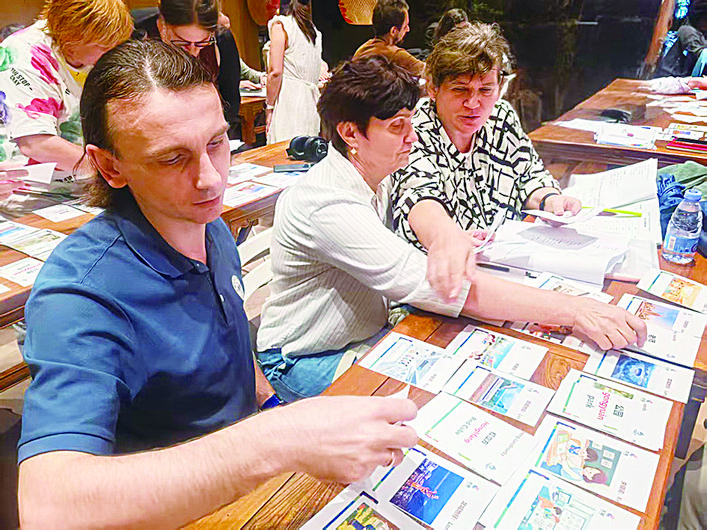
中文教学环节。
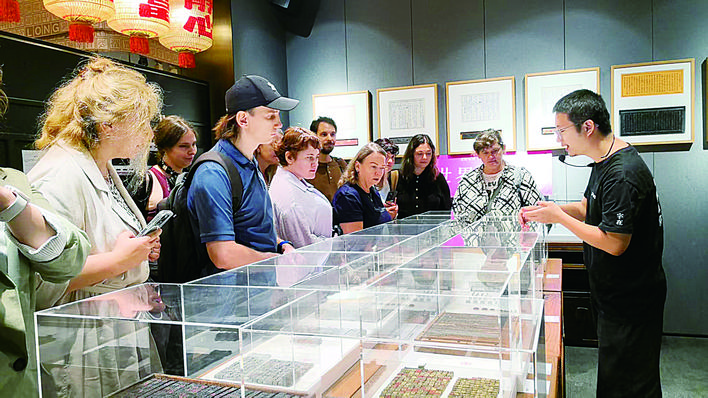
国际人才参观字在活字博物馆。
“活字是南宋时期毕昇发明的,它改写了中国文化传播的进程。”7月7日晚,“Hello LongCheng 国际人才学中文”第二期走进龙城街道回龙埔社区字在活字文化博物馆。20多位国际人才在铅字与墨香中,学习中文知识。这是继7月2日北理莫首期课堂之后,龙城街道面向辖区国际人才推出的又一次中文学习活动,由龙岗区人才工作局指导,龙城街道党工委、办事处主办,街道党群服务中心与龙红格社区工作站承办,回龙埔社区工作站协办。
“Movable type was invented by Bi Sheng in the Southern Song Dynasty, and it rewrote the course of Chinese cultural dissemination.” Recently, the second session of “Hello LongCheng – International Talents Learn Chinese” took place at the Zizai Typography Museum in Huilongpu Community, Longcheng Subdistrict. Over 20 international talents immersed themselves in Chinese language learning amid lead type and the scent of ink. This marked the second Chinese-learning session organized by Longcheng Subdistrict for its international talent community, following the inaugural session on July 2 at MSU-BIT University. The event was guided by the Longgang Talent Work Bureau, hosted by the Party Working Committee and Subdistrict Office of Longcheng Subdistrict, organized by the Subdistrict Party-Mass Service Center and Longhongge Community Work Station, and co-organized by Huilongpu Community Work Station.
课程开始前,国际人才先参观了字在活字博物馆。该博物馆是中国首家以“活字印刷”和“汉字文化”为核心内容的博物馆。工作人员带领国际人才依次参观活字印书馆、活字珍藏馆、汉字美学仓库、活字工坊等多个功能区域。从铸字、拣字、排版到印刷、装订,每道工序凝结传统技艺与匠人精神,博物馆集中展示了泥、锡、木等六种活字的形态,呈现中国最完整的活字收藏体系。
Before the class began, the international talents toured the Zizai Typography Museum, China’s first museum dedicated to “movable type printing” and “Chinese character culture.” Staff members guided them through various functional areas, including the Movable Type Printing House, the Movable Type Collection Hall, the Chinese Character Aesthetics Warehouse, and the Movable Type Workshop. From casting, selecting, and composing type to printing and binding, each step embodied traditional craftsmanship and the spirit of artisanship. The museum also features a comprehensive collection of six types of movable type—made from clay, tin, wood, and more—showcasing China’s most complete movable-type collection system.
“这里有最小的珍藏活字模板。”“这个是活字打印的机器,你们可以看到它打印出来的效果。”每到一处,工作人员都会介绍中国活字的文化底蕴。“中华伟大。”“字库这么庞大,它是怎么排列的?”国际人才在参观过程中不时拍照,仔细观摩中国文字的造型与制作过程,并不时发问,对中国文字表现出浓厚兴趣。参观全程有讲师随行中英互译。
“This is the smallest preserved movable-type template here.” “And this is a movable-type printing press—you can see the effect it produces.” At every stop, the staff explained the cultural significance of Chinese movable type. “China is great!” “With such a vast character library, how are they arranged?” Throughout the tour, the international talents took photos, closely observed the forms and production processes of Chinese characters, and frequently asked questions, showing a keen interest in the Chinese writing system. A bilingual lecturer accompanied the group to provide interpretation throughout the visit.
在中文教学环节,当晚课程主题为“龙城地标与国际大学城”。老师围绕关键词、基本句型、课堂练习等环节展开教学,向学员介绍龙城广场、红立方、大运中心、大学城等城市地标,并用拼音带领学员逐一练习发音。“这是龙城广场。”“我在大运中心购物。”“我喜欢大运中心,这里的建筑像水晶。”学员们跟随老师认真朗读,遇到难点发音,老师走到座位前逐一纠正。“做、坐与座的区别是什么?”有学员主动提问,老师现场对比讲解。课堂穿插拼音练习卡、石头剪刀布等游戏巩固发音。
During the Chinese language session, the evening’s theme was “Longcheng Landmarks and the International University Town.” The teacher focused on key vocabulary, basic sentence patterns, and in-class exercises, introducing landmarks such as Longcheng Square, Red Cube, Universiade Center, and the University Town, while guiding students to practice pronunciations using Pinyin. “This is Longcheng Square.” “I go shopping at the Universiade Center.” “I like the Universiade Center; its buildings look like crystal.” The students read aloud earnestly, and whenever they encountered difficult pronunciations, the teacher walked to their seats to offer individual corrections. “What’s the difference between 做, 坐, and 座?” one student asked proactively, and the teacher provided a comparative explanation on the spot. The class also incorporated Pinyin flashcards and games like rock-paper-scissors to reinforce pronunciation practice.
“谢谢老师。”“我们会邀请更多的朋友来学中文。”课程结束,多位学员用新学的中文表达感谢。课后,有学员刚学完“龙城广场”的中文发音,便前往龙城广场实地打卡,用新学的词句认读路牌、标识,将课堂内容转化为生活实践。
“Thank you, teacher.” “We will invite more friends to learn Chinese.” At the end of the session, several participants expressed their gratitude in the newly learned Chinese phrases. After class, one student who had just practiced the pronunciation of “Longcheng Square” promptly visited the square to "check in" in person, using the newly acquired vocabulary to read street signs and markers, turning classroom learning into real-life practice.
接下来,“Hello LongCheng 国际人才学中文”还将围绕“龙城科技场馆与创新产业”“龙城客家传统文化与老城烟火”“龙城休闲生活与商圈公园”等主题依次展开教学,分别走进大运天地等龙城特色场所,将语言学习嵌入城市地标,提升国际人才的在地文化体验,降低外籍人才生活沟通成本,让国际人才感受到龙城的城市温度,为APEC会议营造开放、包容、和谐的国际交往氛围。
Going forward, “Hello LongCheng – International Talents Learn Chinese” will continue with themed sessions covering “Longcheng’s Science and Technology Venues and Innovative Industries,” “Longcheng’s Hakka Traditional Culture and the Lively Vibe of the Old Town,” and “Longcheng’s Leisure Life, Commercial Districts, and Parks.” These classes will take place at distinctive Longcheng locations such as Universiade MixC, embedding language learning within the city’s landmarks, enriching international talents’local cultural experiences, reducing communication barriers in daily life, and helping them feel the warmth of Longcheng. All these efforts aim to foster an open, inclusive, and harmonious international atmosphere in the lead-up to the APEC meeting.
(文:蔡羽珊 译:曾萍)